Follow Me On Social Media!



Colonial Spoon Bread: A Cozy, Creamy Comfort Food Delight

Introduction to Colonial Spoon Bread
Colonial spoon bread, a delightful and creamy dish, offers a unique blend of history and flavor that can transport you back to simpler times while still feeling right at home in a modern kitchen. As you delve into this recipe, imagine the early American settlers gathering around their hearths, sharing stories and meals made from the corn that surrounded them. This comforting dish embodies the spirit of that era, brimming with warmth and a touch of nostalgia.
Often described as a cross between cornbread and a soufflé, colonial spoon bread is a versatile side dish that pairs beautifully with savory meats, stews, or even a simple salad. Its origins can be traced back to Native American cuisine, where corn was a staple. The dish was adapted over the years, evolving into its current form that many of us love today. Whether it’s for a holiday gathering or a cozy family dinner, this spoon bread is bound to impress with its fluffy texture and rich flavor.
Exploring recipes from our culinary history is not just about the ingredients but also the stories behind them. As you prepare colonial spoon bread, you’re also taking part in a tradition that has been cherished across generations. It is a testament to the creativity and resilience of those who came before us, as they made nourishing meals from the land available to them.
So why not add this historical dish to your recipe repertoire? It connects us with our past, introducing modern cooks to tried-and-true flavors that deserve a spot on today’s tables. Plus, making spoon bread can be a delightful way to engage with friends or family, allowing everyone to participate in the cooking process. Grab a few ingredients and prepare to delight in a dish steeped in history, yet confidently suited for the contemporary palate.
A Taste of Tradition: Where Colonial Roots Meet Modern Kitchens
Colonial spoon bread reflects the essence of early American ingenuity, transforming humble ingredients into something that feels both authentic and contemporary. The light, airy texture achieves a satisfying balance that resonates well with current dining trends, making it a must-try dish!

Key Ingredients for Colonial Spoon Bread
Colonial spoon bread symbolizes comfort and tradition, taking you back to those simple yet hearty meals of yesteryear. Each ingredient plays a pivotal role in creating the warm, velvety texture that makes this dish unforgettable.
-
Cornmeal: The star of this dish, cornmeal gives spoon bread its characteristic texture. Opt for fine or medium-ground cornmeal to achieve the ideal creaminess. The flavor is subtly sweet, connecting you with the agricultural roots of colonial American cuisine.
-
Milk: A rich addition that enhances the creaminess, milk brings the cornmeal together beautifully. For a twist, try using buttermilk—it adds a nice tang and richness that elevates the dish.
-
Eggs: Essential for binding and leavening, eggs create that quintessential airy fluffiness. Beating the eggs until frothy and then folding them into the mixture ensures a light and delightful result.
-
Butter: For flavor and moisture, melted butter is a must. It not only enriches the spoon bread but also contributes to that lovely golden crust.
-
Baking Powder: This leavening agent is crucial for giving your spoon bread the rise it needs. A fresh batch ensures optimal fluffiness.
With these simple yet key ingredients, you’re well on your way to whipping up a delicious colonial spoon bread that honors tradition and delights the palate.
Why You’ll Love This Recipe
Comfort in every bite
Indulging in colonial spoon bread is like getting wrapped in a warm blanket on a chilly evening. This dish brings together simple ingredients to create a rich, comforting experience that embraces your senses. Picture this: as you dig into the fluffy, luscious texture of spoon bread, the buttery flavor dances on your palate, leaving you craving just one more bite.
The magic of this recipe lies in its easy preparation and adaptability. With just a handful of pantry staples, you can craft a dish that delights your guests and warms your heart. It pairs beautifully with everything from savory stews to sweet jams, making it a versatile addition to any meal.
Imagine sharing this delightful treat with friends during a cozy dinner, or enjoying it solo with your morning coffee. Every mouthful tells a story of tradition, connecting us to the past while redefining modern comfort food.
Plus, it’s not just delicious; it’s incredibly satisfying to make from scratch. As the aroma fills your kitchen, you’ll feel accomplished and inspired. There’s a reason colonial spoon bread remains a cherished classic; one taste, and you’ll understand why it’s beloved across generations.

Variations of Colonial Spoon Bread
What flavors can you explore?
Colonial spoon bread is a wonderfully adaptable dish that can grace any dining table, offering a canvas for a variety of exciting flavors. Have you considered how a simple cornmeal base can morph into something thrillingly diverse?
-
Savory Herb Infusion: Adding chopped fresh herbs like rosemary or thyme will elevate the dish with fragrant undertones. Mixed well, they create a delightful aroma that lingers in the air, stirring up anticipation.
-
Cheese Pleasures: Picture this—g gooey, melted cheese mingling with your spoon bread. A sharp cheddar or creamy gouda can bring a rich dimension that pairs beautifully with a hearty chili or soup.
-
Sweet Indulgence: For a dessert twist, try incorporating a spoonful of honey or a sprinkle of cinnamon along with chopped apples. You’ll create a comforting dish reminiscent of fall, sure to bring warmth to even the chillest of days.
-
Spicy Kick: If you’re feeling adventurous, why not stir in some diced jalapeños or a dash of cayenne pepper? This will kick your colonial spoon bread up a notch, making it a standout side at any barbecue.
With these variations, your colonial spoon bread can tell a different story with every recipe. Are you excited to explore these flavors?
Cooking Tips and Notes for Colonial Spoon Bread
Perfecting your spoon bread experience
When crafting the perfect colonial spoon bread, the key lies in selecting the right ingredients and techniques that respect the traditional roots while embracing modern cooking practices.
-
Cornmeal: Opt for a fine-ground cornmeal to achieve that smooth, creamy texture. Yellow cornmeal provides a delightful color contrast and flavor, while white cornmeal offers a sweeter taste. Experiment with both for unique results!
-
Milk or Cream: Using whole milk will give your spoon bread a rich, velvety consistency. For an extra indulgent treat, try substituting with heavy cream. Remember to warm it before adding, as it integrates smoothly into your mixture.
-
Eggs: Fresh eggs are essential. Beating them until light and fluffy before incorporation can help your spoon bread rise beautifully. This makes it light and airy — a hallmark of a perfect spoon bread.
-
Baking Powder: This isn’t just for rising; it’s what makes your spoon bread delightfully tender. Be sure it’s fresh for the best results; old baking powder won’t give you the lift you’re after.
-
Serving: Spoon bread is best served warm right out of the oven. Pair it with savory dishes or sweet toppings like honey and butter for restaurant-quality flair.
This comforting dish is steeped in history, and with a few mindful tips, your colonial spoon bread will surely shine at your table. Enjoy the journey of creating this delightful recipe!
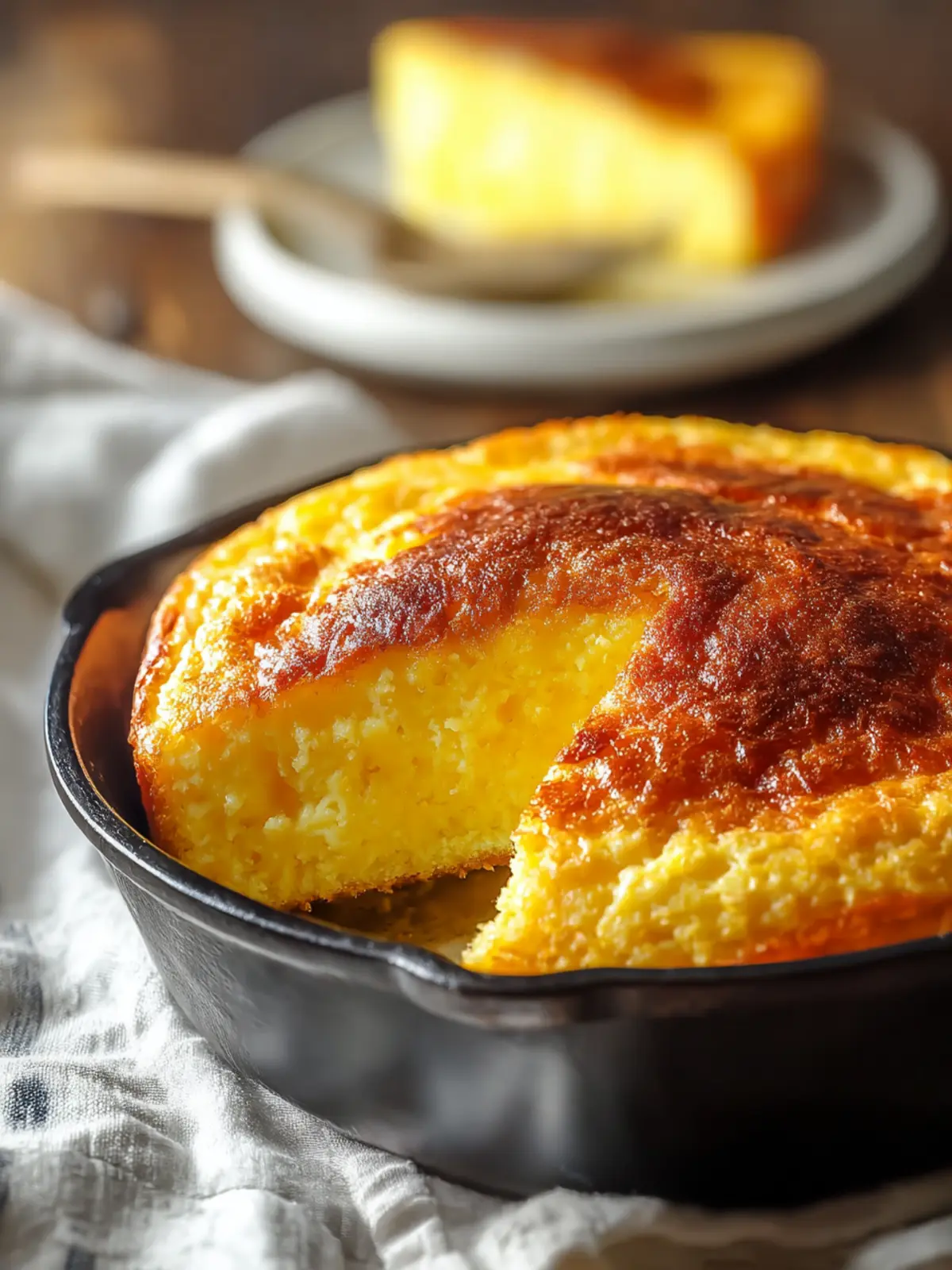
Serving Suggestions for Colonial Spoon Bread
When it comes to enjoying colonial spoon bread, the sky’s the limit. Its soft, delicate texture and subtly sweet flavor make it the ideal companion for a variety of dishes, creating a harmonious dining experience. Imagine a cozy dinner, the aroma of freshly baked spoon bread filling the air as you gather around the table with friends and family.
Pair it with your favorite dishes
-
Savory Meats: Spoon bread is fantastic alongside roasted chicken, brisket, or even a rich beef stew. The bread absorbs the flavorful juices beautifully.
-
Vegetable Sides: Add some sautéed greens or roasted root vegetables to your plate for a wonderful contrast in flavors and textures.
-
Cheese and Charcuterie: Create a delightful spread by serving spoon bread with artisanal cheeses, cured meats, and pickled vegetables.
-
Soups and Stews: Nothing beats a warm bowl of soup or stew paired with a piece of spoon bread to soak up every last bit of deliciousness.
Embrace the versatility of colonial spoon bread and let your creativity shine at mealtime!
Time Breakdown for Colonial Spoon Bread
Creating the perfect colonial spoon bread is a delightful journey into culinary history, and knowing the time involved can make the process smoother.
Preparation time
Setting aside about 15 minutes for preparation allows you to gather your ingredients and set the stage for this comforting dish. Chopping, measuring, and whisking might seem tedious, but it’s all part of the delightful experience.
Baking time
Once your mixture is ready, the colonial spoon bread needs about 30-35 minutes in the oven. Watching it rise and bubble is a treat in itself, signaling that warm, fluffy goodness is on its way.
Total time
In total, you’ll want to allocate approximately 50-55 minutes from start to finish. With each step, you’re not just cooking; you’re weaving a story that connects you to a time long past, making your homemade dish feel that much more special.
Nutritional Facts for Colonial Spoon Bread
Understanding the nutritional profile of colonial spoon bread not only enhances your culinary experience but also allows you to enjoy this delightful dish with confidence. Here’s a quick glance at what makes this southern classic a comforting choice:
Calories
Each serving of colonial spoon bread contains approximately 200 calories, making it a satisfying side dish or a hearty breakfast option. This comfort food is easy on the waistline while still delivering rich flavors.
Protein
With about 6 grams of protein per serving, colonial spoon bread provides a decent protein boost, especially when paired with hearty stews or soups. This makes it a great addition to any meal for those mindful of their protein intake.
Sodium
At approximately 350 milligrams of sodium per serving, this dish is relatively moderate in salt compared to other comfort foods. You can enjoy your colonial spoon bread without worrying too much about sodium levels, which is a win for both health and taste.
Enjoy making this historic delicacy while keeping your nutritional goals in mind!
FAQs About Colonial Spoon Bread
Colonial spoon bread is a delightful dish steeped in history that adds a comforting touch to any meal. It can be a little daunting if you’re not familiar with this unique recipe, so let’s dive into some frequently asked questions to give you all the information you need for a tastier experience!
Can I make spoon bread ahead of time?
Absolutely! You can prepare colonial spoon bread ahead of time by mixing the ingredients and storing the mixture in the refrigerator for up to 24 hours. Just remember that the texture may slightly change after sitting. For the best results, bake it fresh if possible; however, if you’re in a pinch, welcoming your guests with a pre-prepared dish can still work wonders!
How do I store leftovers?
Storing leftover spoon bread is easy! Once it’s cooled, transfer it to an airtight container and refrigerate. It should last about 3-4 days. When you’re ready to enjoy it again, simply reheat in the oven or microwave, making sure to keep it moist. A splash of milk or water can help restore its creamy texture.
What should I serve with spoon bread?
Colonial spoon bread pairs beautifully with a variety of dishes. Think savory options like roasted meats, stews, or homemade chili. It also complements vegetables perfectly, bringing a rich and creamy texture to your meal. Feel free to experiment with different flavors to create a delicious spread at your next gathering!
Conclusion on Colonial Spoon Bread
A timeless dish that brings everyone together
The charm of colonial spoon bread lies in its ability to transform a simple meal into a heartwarming gathering experience. This dish, with its creamy texture and subtle corn flavor, invites us to slow down and appreciate the classic comforts of home-cooked food. Imagine sharing this delightful bread with loved ones, passing around bowls, and savoring the rich flavors that echo history. Whether enjoyed as a side to savory dishes or a comforting main dish, colonial spoon bread has a unique way of connecting us through cherished moments. So, why not give this recipe a try and create your own delicious memories?
Print
Cornmeal Bake
- Total Time: 45 minutes
- Yield: 8 servings 1x
- Diet: Vegetarian
Description
This delicious cornmeal bake is a perfect side dish or main course.
Ingredients
Scale
- 1 cup cornmeal
- 2 cups milk
- 2 tablespoons butter
- 2 large eggs
- 1 teaspoon baking powder
- 0 teaspoons salt
- 1 tablespoon sugar (optional)
- 0 cups shredded cheese (optional)
Instructions
- In a medium saucepan, heat the milk and butter over medium heat until just steaming.
- Gradually whisk in the cornmeal, stirring continuously until thickened, about 2–3 minutes.
- Remove from heat and let the mixture cool slightly.
- Stir in baking powder, salt, and sugar (if using).
- Beat in eggs one at a time until fully incorporated.
- Fold in shredded cheese if desired.
- Pour the batter into a greased 9-inch baking dish or cast iron skillet.
- Bake at 375°F for 30–35 minutes, until puffed and golden brown.
- Serve warm, scooped into bowls or onto plates.
Notes
- This dish can be served as a side or a main dish.
- For a spicy kick, consider adding jalapeños or cayenne pepper.
- Prep Time: 10 minutes
- Cook Time: 35 minutes
- Category: Side Dish
- Method: Baked
- Cuisine: American
Nutrition
- Serving Size: 1 slice
- Calories: 200
- Sugar: 1g
- Sodium: 20mg
- Fat: 8g
- Saturated Fat: 5g
- Unsaturated Fat: 2g
- Trans Fat: 0g
- Carbohydrates: 28g
- Fiber: 2g
- Protein: 5g
- Cholesterol: 60mg